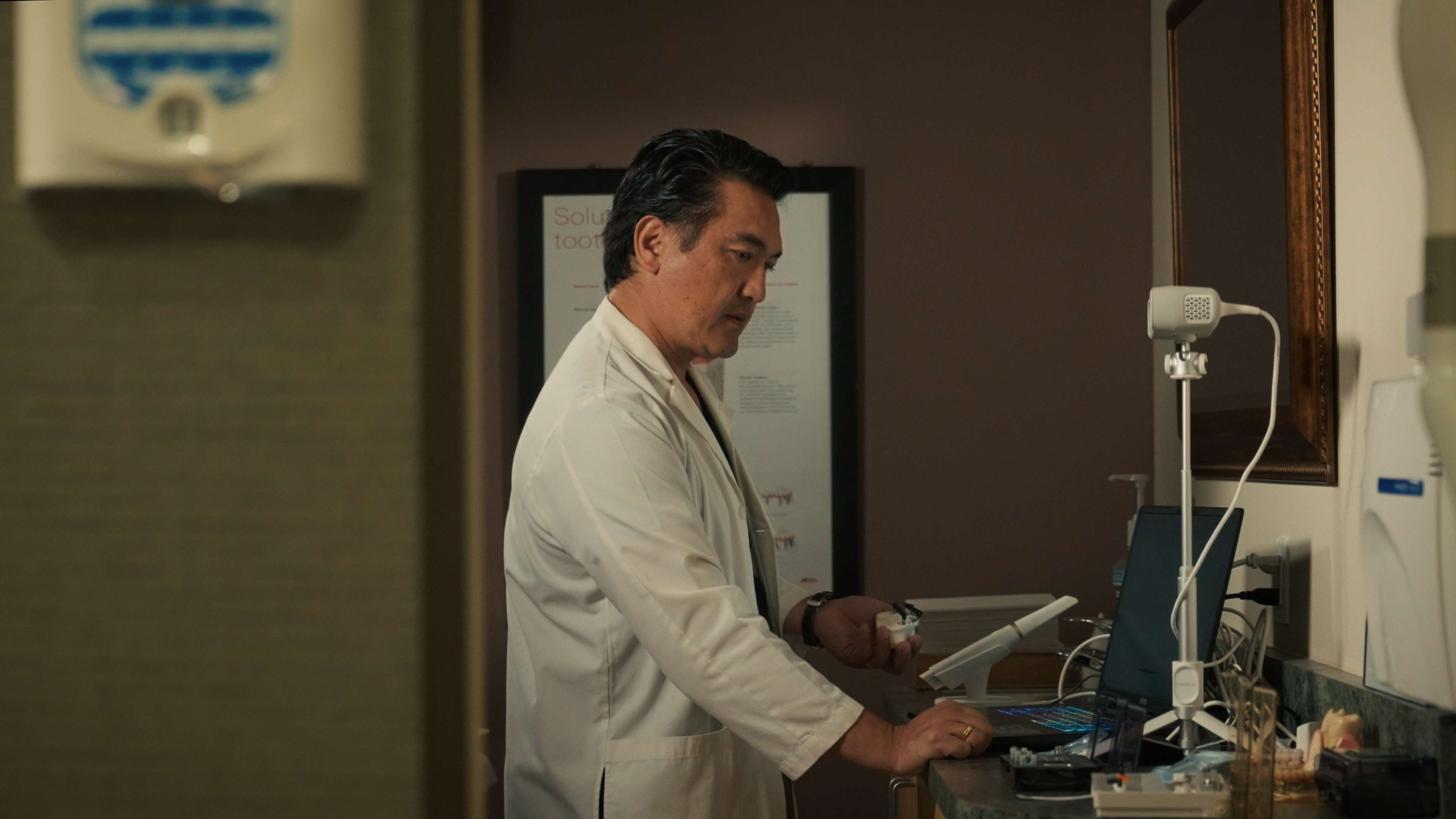
The single biggest improvement in implant dentistry over the past 20 years isn’t a new implant material or surgical technique — it’s the ability to plan and execute implant placement using 3D imaging and computer-guided protocols. Cone-beam CT (CBCT) imaging shows the precise three-dimensional anatomy of your jaw, sinus, and nerves. Computer-guided surgery translates that imaging into a precise surgical plan, often executed through a custom 3D-printed surgical guide that places implants exactly where they were planned. We use both technologies in essentially every implant case in our practice.
A traditional dental X-ray (panoramic or periapical) is a 2D image. It shows the general layout of your teeth and jaw, but it can’t show the third dimension — depth. For routine dentistry, that’s adequate. For implant planning, it’s not.
A cone-beam CT scan captures a full 3D volume of your jaw in roughly 20 seconds. The radiation dose is significantly lower than a medical CT and only modestly higher than a traditional dental panoramic. The output is a 3D model we can rotate, slice, and measure in any direction.
What we see in a CBCT that we can’t see in a 2D X-ray:
After the CBCT scan is captured, we import the 3D data into surgical planning software. The implant is virtually placed in the optimal position, depth, and angulation — taking into account the bone anatomy, the planned restoration, and the relationship to neighboring teeth and critical structures.
For most cases, we then generate a surgical guide — a custom 3D-printed template that fits over your remaining teeth (or, for edentulous patients, over your gums) and includes precision-machined sleeves at each planned implant site. The guide directs the surgical drill to the exact planned position, depth, and angle.
The result is implants placed within fractions of a millimeter of the digital plan. For complex cases — particularly full-arch placement, zygomatic implants, and any case where the margin for error is small — guided surgery is the difference between predictable and unpredictable outcomes.
Some implant cases can be safely placed freehand by an experienced surgeon. Others should not be. We use the following general guidance in our practice:

The 3D scan itself takes about 20 seconds. You stand or sit still while the imaging arm rotates around your head. There’s no contrast material, no IV, and no special preparation required.
Computer-guided surgery, from the patient’s experience, looks very similar to non-guided surgery — except the procedure is typically faster, with less surgical exploration required. The surgical guide fits over your teeth or gums and directs the surgical instruments to the planned sites.
For zygomatic implants and other complex cases, the planning conversation that precedes surgery is more involved. We typically review your 3D plan with you, showing where each implant will be placed and why, before the day of surgery.

Patients sometimes ask about CBCT radiation dose. The honest answer is that the dose is meaningfully higher than a single dental X-ray but lower than a medical CT scan, and the clinical benefit for implant planning far outweighs the radiation cost.
For context: a CBCT for implant planning delivers roughly the same radiation as 3–5 days of natural background radiation from being on Earth. Compared to a routine medical CT, it’s about 1/10th the dose. We use lead aprons, thyroid collars, and dose-optimized scan protocols to minimize exposure further.